Showing posts with label PKK. Show all posts

3.8.08

A New Dawn: Turkey post July 2008

Now that the highly dramatic month of July has finally come to an end, the people of Istanbul can collectively turn a page and look to an immediate future, which appears considerably more certain, if not banal, in comparison to the recent past. The city's bourgeoisie will head to their summer houses in the greater Istanbul region, while the upper classes augment their social status and darker skin tones at exclusive seaside ghettos such as mythic Bodrum.


By mid-September, Istanbul and Turkish current affairs in general will most likely return to their more traditional frenetic cadence. The school year will have commenced, Istanbul traffic jams will be in full-force and the "deep state" Ergenekon trial will steadily gain momentum in the headlines. On the heels of the Turkish national team's truly remarkable and extremely lucky showing in the UEFA Euro 2008 tournament, one must also not forget the beginning of the new domestic football season; more Brazilians playing for Fenerbahce and greater promise for the eternal underdog and this observer's favorite team, Trabzonspor.

While all of the above is well-established on the country's active radar over the next three to four months, this observer is surprised by the relative lack of consideration being given to basic economic variables, which arguably hold the greatest potential to disrupt. It has been quite remarkable to observe how Turkish equities analysts, often quoted in the Western media, have been very quick point out that all of the political intrigue surrounding the country's economy has been "already priced into the market" with apparently great efficiency.

To their credit, the Istanbul Stock Exchange undertook an aggresive ascent during the hours leading up to the court's decision and barely flinched in reaction to the American Consulate shooting at the beginning of July and the more recent "double bombing" at the end of July. While both events were indeed tragic due to the loss of human life involved, both were also quite bewildering in terms of identifying a likely motivation or intended political message. Furthermore, the Turkish state's decisions to attribute the consulate bombing to "Al-Qaeda" and the Istanbul double bombing to the "PKK" were both predictable and unconvincing. The unfazed reactions of equities investors were a testament of the relative insignificance of both incidents.

The financial markets greeted the Turkish Constitutional Court's decision to not close the ruling AK Party with predictable enthusiasm. It was a highly pro-business decision, which this observer accurately predicted in April 2008. The recent sale of Akpet to Lukoil and the Istanbul Stock Exchange's rise from this year's doldrums, which have earned it the distinction of the world's worst performing emerging market exchange in 2008, will remain sparkling examples of Turkey's "new dawn" during the next few months. Nonetheless, certain extremely fundamental concerns, in addition to the slowing Eurozone economy, remain. They consequently demand adequate consideration in order to clearly assess the country's short and medium-term future.

The following are a series of economic issues, some new and others ongoing, that this observer has picked from the headlines over the past few weeks. It is highly likely that some combination of these issues will influence country's political and economic landscape through 2009.

Deutsche Bank AG, the world's biggest currency trader, raised its forecast for the lira against the dollar after Prime Minister Recep Tayyip Erdogan's Justice and Development Party escaped a constitutional ban. The currency will end the year at 1.20 per dollar, Arend Kapteyn, chief economist for Europe, Africa and the Middle East at Deutsche Bank in London, wrote in a report dated today. The bank's previous estimate was 1.41 per dollar.
Source: Bloomberg
Turkey's prime minister, defense minister and military commanders are meeting to appoint a new military chief of staff. The four-day gathering began Friday at the armed forces headquarters in Ankara...Gen. Ilker Basbug, the current commander of Turkey's army, is expected to succeed chief of staff Gen. Yasar Buyukanit, who retires this month.

Source: IHT
"Once the euphoria dies down, attention will again turn to run-of-the-mill issues, like global markets, oil prices, and the domestic macro situation," says economist Banu Tokali of Istanbul brokerage FinansInvest, citing "inflation and monetary policy, in particular, coupled with the still-gaping current account deficit."

Turkey's central bank raised rates a further 50 basis points in July, repeating identical hikes it made in May and June. The latest increase brings the overnight borrowing rate to 16.75%, with the lending rate unchanged at 20.25%. The bank has been cagey about projecting its future monetary course, given the uncertain outcome of the AKP case and the unknown duration of the recent drop in oil prices. But in its July inflation report, the bank hinted at a slowdown in rate hikes. The bank also revised upward its projected inflation rate for 2008, from 9.7% to 10.6%, and pegged next year's rate at 7.9%.

Source: Business Week
Turkey, which could find funding from global markets more easily in the past, had to increase its interest rates to cope with the squeeze. The credit crunch process in the global markets has created a dramatic change in the financing of Turkey's current account deficit.

In the first five months of the year, current account deficit rose 33.3% from $16.16bn to $21.54bn while the total of foreign direct investments and portfolio investments dipped 73.3% from $18.87bn to $5.0bn. Meanwhile, foreign borrowing of banks and companies surged 116.2% from $10.39bn to $22.46bn, an indication that there may be a problem in financing the current account deficit.

Normally, the distress in financing the current account deficit results in a narrowing of imports for investments and production. Therefore, while the current account deficit is moderated, the economy starts to shrink. When companies are unable to find resources from abroad, they are obliged to knock at the door of banks for loans. This increase in loan demand results in the further increase of loan interests.

Source: Referans

Turkey raised its natural gas prices by nearly 20% on Friday in line with a new cost-based pricing mechanism, state pipeline company Botas said, announcing a move likely to increase already high inflation.

The gas price rise was fixed at 16.88% for residential properties and 18.77% for industry, Botas said. The cost-based pricing mechanism, introduced by the High Planning Board from the start of July, applies to all state energy companies and is seen as an important step before further privatisations of power distribution and production facilities.

Before the new system was introduced, electricity prices for industry were raised by 22% effective from July. Electricity companies have not applied to set new power tariffs this month. Rises in energy prices generally have been a major component in Turkey's double-digit inflation. The central bank, which has raised interest rates this year and said it could tighten further, has repeatedly cited energy prices as an inflation risk.

Source: Reuters

11.5.08

Turkey's Military and its Role in Politics

Bosphorus Watch favorite, Gareth Jenkins, has authored yet another intriguing piece about Turkish society. Jenkins' most recent essay concerns the professionalization of the Turkish military. Currently, only one in six members of Turkey's military is a professional soldier. While the military's total size is 600,000, the operational effectiveness of its conscripts has been repeatedly called into question especially during the recent operations in northern Iraq. In particular, Turkish conscripts have demonstrated a penchant for being abducted by the PKK, undoubtedly causing great embarrassment to the leaders of NATO's second-largest member force.

Starting in May 2008, the army will begin to phase out the use of non-professional soldiers for its six commando brigades, which comprise approximately 10,000 soldiers. By the end of 2009, the commandos will operate as an entirely professional fighting force. Although unlikely to be accomplished in the short-term, the commandos may only be the beginning of a military-wide effort to transform the Turkish military into an exclusively professional force.

(For further details, please refer to this article in Today's Zaman.)

The strength of Jenkins' piece is his in-depth exploration of the army's past and present relationship with Turkish society. His consideration of the military's role as an "educator" is particularly important:

It is unclear, however, what impact the increased professionalization of the Turkish military will have on its relationship with society as a whole. Many in the higher echelons of the TGS favor the complete professionalization of all of the country's armed services, although they acknowledge that cost considerations make such a change unlikely in the near future. But there is also a concern that the abolition of conscription would sever what they regard as a sacred bond between the Turkish nation and the profession of soldiering.

Turkish school textbooks still portray the military as something akin to the essence of the Turkish nation, although the intensity with which it is inculcated has declined in recent decades. Indeed, until the 1960s and 1970s, when more Turks began to have access to formal education, the country's military was itself frequently referred to as "a school." It was often during their military service that conscripts from poorer backgrounds first learned to read and write and become familiar with social niceties such as the use of a knife and fork. Even today, for the mass of the male Turkish population, military service remains a rite of passage into manhood. Although it is frequently overlaid with resentment at the often haughty manner in which they are treated by the members of the officer corps, many retain an emotional attachment to the institution, if not necessarily to all of its members, long after they have completed their military service. Particularly outside the Turkish elite, the inculcation of the identification between the military and the nation, together with the personal experience of military service, undoubtedly have an impact on public willingness to tolerate the Turkish military's occasional attempts to influence the political process; especially in times of perceived risk or crisis.

The identification between the military and the nation is, however, already being eroded by the spread of literacy and developments in communications, which have meant that Turks now have access to many more sources of information than the state-controlled educational system and what they are told by their commanding officers during their military service. Similarly, the gradual professionalization of the army, even if it is initially only in certain units, is likely to weaken the emotional bond formed by military service; raising the possibility that the requirements of improved military efficiency may come at the cost of a reduction in the TGS's ability to influence the political process in Turkey.

In relation to the lower and rural echelons of Turkish society referenced in Jenkins' article, the army arguably maintains a degree of influence greater than that exercised by the country's traditional primary and secondary school apparatus. In particular, it is relatively unknown to what level this demographic actually completes traditional education. Therefore, military service can be viewed as the last opportunity for the Turkish state to create an "emotional link" among the more disenfranchised, poor or rural members of Turkish society.

The poor or rural male demographic has proven quite significant to contemporary Turkish political proceedings; the number of AKP supporters who hail from this segment of society is substantial. As a result, the Turkish military's ability to apply an emotional stamp on the "hearts and minds" of these poor or rural young men would clearly have great appeal to those in Turkey who advocate a strict secular, Western line, such as country's generals. Professionalization of the military would not only involve a stiff financial cost, but it would also eliminate an important means of ideological influence.

There would also appear to be a second approach to analyzing the
military's pursuit of an entirely professional force. With his comment that, "the identification between the military and the nation is, however, already being eroded by the spread of literacy and developments in communications", Jenkins makes the tacit suggestion that the Turkish military may be coming to grips with the fact that the secular state's ideological influence is waning. There is arguably no greater proof of this fact than in the repeated democratic election of the the AKP.

By foregoing the traditional opportunity to shape the hearts and minds of young conscripts, the military could instead concentrate its resources on creating a secular elite through the ranks of a professional army. It is widely known that those soldiers who are allowed to move up the ranks of the military are able to do so as a result of both professional and ideological merit. Those who profess beliefs other than the traditional Ataturk-inspired secular Western line encounter a professional dead-end. With a completely professional army, Turkey's generals could better guarantee that the desired ideology is maintained from the high command all the way down to the troops chasing the PKK on the ground.

While such improved ideological efficiency, paired with more reliable combat training, would ideally strengthen the Turkish military's operational capabilities, it would also reposition the military's role in society as Jenkins demonstrates.

Despite its much feted "e-coup" in the spring of 2007, the Turkish military's role in politics over the course of the AKP era has been steady, but remarkably restrained compared to past eras. It is conceivable that the generals have in fact bought into the need to practice good public relations vis-a-vis the EU, the Western media, and possibly even Turkey's regional peers.

Rather than diluting its resources in order to more widely interact with the masses, the professionalization of the Turkish military would be a philosophical shift towards the strengthening of elites. Although this might be a rather unfair comparison, a more PR-savvy Turkish military philosophy may hope to develop personalities from within it ranks, who ultimately play a role in Turkish politics similar to the one played by Dwight Eisenhower, Colin Powell and now John McCain in America.

28.2.08

Snowsuits and Headscarves

A free, throw-away commuter newspaper made its debut in Istanbul during the past week and its timing could not have been more auspicious. As far as this observer is aware, the paper's debut has coincided with an event that has not occurred since the Czarist Russian offensive through the Caucasus during WWI - the last time Turkish soldiers were thrown into a mountainous winter campaign beyond the borders of Anatolia. Turkish military sceptics, including this observer, were generally surprised to learn that the military had chosen to undertake a winter operation in light of the added level of difficulty. The Turkish media has accordingly taken great pains to capture the exploits of the military's adventure into snowy northern Iraq. Photos of Turkish soldiers wearing white snowsuits have been the highlight of the media's coverage partly to emphasize the operation's degree of daring and surprise, but also due to the simple fact that the Turkish military has not allowed sufficient media access for the creation of alternative images.

The winter surprise attack on PKK positions in the Qandil Mountains region in northern Iraq has thus far yielded two main story lines in the international media and in the Turkish media to a lesser extent. First, there appears to be a general level confusion concerning what the Turkish military has actually accomplished. While body counts of dead "terrorists" as well as Turkish "martyrs" are provided in order to give the public a sense of progress, there does not exist a single source beyond the Turkish military's website or a press conference with General Büyükanıt to corroborate or qualify such statistics. (What delicious irony that the Turkish military, the country's staunchest defender of secularism, has appropriated an Islamic term to describe its combat dead.)

In addition, there appears to be a second point of confusion surrounding the question of why the Turkish military has maintained such a media freeze over the operation. This is particularly bewildering in light of the military’s comments that the operation has specific objectives, which are supposed to be limited in duration. It is unclear what the military has to gain from this approach.

It is still quite likely that the Turkish military will reveal the scope of military achievements for its latest operation once Turkish forces begin to conduct their pullout. The military seems to have so far maintained the view that it is turning the winter elements to its advantage with the added help of the element of surprise. The snow will hamper the Turkish forces, but it will also impede PKK fighters from fleeing the scene of attack. However, this observer also wonders whether PKK forces have truly decided to sit around the camp fire holed up in the snowy Qandil mountains for an entire winter season, as opposed to settling at lower and warmer elevations for the winter while waiting for the Turkish military to venture out in the spring. Whatever is the case, the Turkish military will undoubtedly label its operation a success whenever the time comes to make such announcements.

Another point worthy of consideration is to question whether Turkey’s winter offensive was truly intended to have decisive military implications. Rather, it seems quite possible that it was conceived for sheer political convenience. This view comes to mind when one considers the dominant fashion statements plastered across the entire spectrum of the Turkish media over the last eight days - either soldiers in white snowsuits or female university students wearing headscarves.

Combat operations against the PKK have always functioned as a unifying mechanism in Turkish society. This is no more apparent than when viewing the constant footage on all national news broadcasts that depicts the official funeral ceremonies or the grieving families of the Turkish combat dead. Faced with the incredible degree of polarization that has resulted from their successful initiative to legalize headscarves for women attending Turkish universities, it seems logical for Erdoğan and Gül to have encouraged the military to trudge around in the snow for a few weeks. A winter operation would distract the public away from its social crisis since it would remind them that there exist more critical and immediate threats to the livelihoods of the Turkish people compared to the headscarf. Judging by the fact that combat operations have been constantly featured as the lead story on the evening news during the past week, their tactic seems to have worked.

17.2.08

Further Reading: "Minority Rules"

Meline Toumani's New York Times Sunday Magazine article, "Minority Rules", is simply phenomenal. Her account of the contemporary situation of Kurds in Turkey, which is based on an interview with Diyarbakır's former mayor, weaves together all of the most necessary threads to describe the current state of affairs.

Click here, or

nytimes.com/2008/02/17/magazine/17turkey-t.html?ref=magazine

Toward the conclusion of her article, Toumani admits to her Armenian heritage. Sadly, this will most likely result in her article being discredited and ridiculed by many circles in Turkey. Even more criticism will be aimed at her choice to feature Diyarbakır's mayor, whom Ankara sacked after Toumani first conducted her interview.


3.2.08

Further Reading: Headscarves, generals, and Turkish democracy

The following article is an exhausting, yet extremely comprehensive, sketch of the most important issues in contemporary Turkish society. The author, Niels Kadritze, is the editor of the German edition of Le Monde Diplomatique. While Mr. Kadritze's essay is somewhat lacking in terms of the organization of ideas, the quality and range of his observations are absolutely first rate.

www.eurozine.com/articles/2008-02-01-kadritzke-en.html


2.1.08

"Made in Turkey" - but for how long?

During a flight from Istanbul to Europe, this observer had the great fortune to strike up a conversation with a gentleman named Mehmet. Mehmet and his wife, along with half of the economy section of the plane, were on their way to a two week tour of South America. All of the tour participants were of retirement age or older, wore gold watches and jewelery, and lived in some of the nicer residential areas of Istanbul. They collectively represent a sort of golden generation of Turks, who were born toward the beginning of the Turkish Republic. Ataturk's reforms have influenced the entirety of their personal and professional development. They are accordingly some of the staunchest defenders of secular and westernized Turkey, since it is they who largely realized Ataturk's vision and have been its greatest beneficiaries.

Mehmet began his career in the navy as a cadet at Turkey's naval academy and ultimately served as a electronics technician. He spoke with great pride about the technical training he received from the US Navy and also boasted that his daughter completed a masters in electrical engineering from a major American university. When Mehmet left the Turkish Navy, he started a manufacturing business with the technical expertise, which he had acquired during his career. His factory, which is located on the Asian side of Istanbul, has a vibrant business producing electronic components used in televisions made by Turkey's largest household electronic goods manufacturer, Vestel.

Mehmet's manufacturing business serves as a microcosm of Turkey's economic renaissance, which has particularly bloomed during the past few years of the AKP leadership. No longer dominated by state-owned businesses, agriculture and textiles, Turkey's economy emerged from a politically tumultuous period in the 1990s with an aggressive approach and strong support from foreign investors. According to the president of the
Turkish Confederation of Businessmen and Industrialists, Rızanur Meral, 60% of Turkey's exports are purchased by European Union members. Turkey's historically weak currency, lower wage levels, emerging domestic economy, long-time NATO membership and proximity to Europe have made it a logical location for manufacturing growth.

While the lure of these conditions continues to prevail for the most part, Mehmet's forecast for the future of his business would appear to have great relevance to the prospects of the Turkish economy in general. "In three years I will have to close my production line," Mehmet predicted. In order to compete with Chinese manufacturers vying for Vestel's supply contracts, Mehmet's business has been forced to cut the price of its electronic components. These cuts will eventually render his domestic production operations completely unprofitable - a phenomenon that is relevant to many of the world's emerging market economies including Turkey.

Mehmet's story exposes one of the many vulnerabilities of the Turkish economy, which this observer views as an increasingly visible theme for 2008. While Turkey's labor costs may be low compared to Western Europe or even most of Eastern Europe, it offers little advantage when compared to India or China. Moreover, raw material costs in India and China benefit from substantial state subsidization. Due to Turkey's considerable trade with Europe, local Turkish suppliers of raw materials have raised their prices to European levels and the Turkish market furthermore does not feature nearly the same level of raw material subsidization.

Throughout 2007 the great strength of the Turkish lira, buoyed by record levels of foreign investment covering Turkey's growing deficit as well as by substantial foreign exchange trading, kept pace with the rising price of oil. Unlike in the US economy, which has felt the effects of higher energy costs, the Turkish economy was relatively buffered. Despite this situation,
the following analysis from a Bloomberg article references a chronic fault in Turkey's manufacturing system.
“The essential problem for Turkey is the fact that manufacturers rely on imported goods to make products,” said Şengül Dağdeviren, economist for Oyak Bank in Istanbul. “Whenever exports increase, imports go up accordingly.” Exports rose 30 percent to $11.3 billion in November, a record for a single month, the statistics agency said Monday. Imports increased 29 percent to $16.6 billion in November from the year-earlier period, the agency said.
The Turkish government has responded to this situation by calling for Turkish manufacturers to pursue more value-added products. However, this observer wonders how moving up the value chain for manufactured products will alleviate Turkey's troublesome import-export cycle. Value-added products will make the country's exports worth more, but they will still require Turkey to import the necessary inputs - perhaps even at greater levels of cost.

The Turkish economy thrives on political stability and it appears unlikely that the magicians in the AKP will be able to ensure such conditions for 2008. The political calendar in 2008 will be marked by the inevitably heated battle over the series of constitutional reforms desired by the AKP. In addition, Prime Minister
Erdoğan has demonstrated considerable resolve to overhaul the country's social security system, which is a key sticking point for Turkey's relationship with the IMF and with the European Union to a certain extent. At the moment, roughly 8m Turks directly receive social security payments and "90 percent of the Turkish population is directly or indirectly a part of the social security system" according to this article in Today's Zaman.

The legacy of last year's drought, the potential for military activity related to the PKK and interruptions in energy cooperation with Iran and Russia could also contribute to the brewing storm, which will hamper Turkey's economy in 2008. With slower levels of growth predicted for the coming year, Turkey and its AKP-led government must be extremely sensitive to the social and ethnic tensions that will most likely rise as the general climate of economic prosperity dissipates. It is this potential for unrest in Turkish society, which ultimately represents the greatest threat to the near-term progress of the Turkish economy, in addition to the nation at large.

25.11.07

Turkey's Foreign Affairs Blitz

While of minor importance to most Turks in comparison to their national football team's efficient victory over a weak Bosnia-Herzegovina side and the team's resulting accession to the Euro 2008 tournament, this past week also featured the Turkish government culminating an impressive flurry of foreign affairs activity. Although the Turkish national team has little chance under its coach, Fatih Terim, whose arrogance shadows his remarkable flair for dramatic dress-shirt and jacket collars, the government's latest efforts will surely give Milli Takım fans something to talk about beyond their team's early exit from the European football championship tournament this summer.

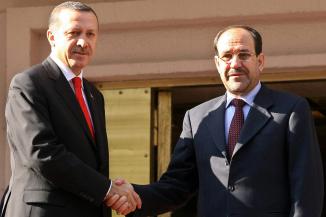
Turkey's latest foreign affairs campaign began almost a month ago. Motivated by Turkey's highly theatrical bluff to invade northern Iraq, Ankara hosted a rather awkward summit with Iraq's Prime Minister Al Maliki. This visit was followed by King Abdullah of Saudi Arabia and his delegation of 11 planes. Erdoğan and Gül would then elegantly contrast the King's visit by hosting Israel's President Peres, in addition to Palestinian National Authority President Mahmoud Abbas. Other than the usual series of forced handshakes in front of photographers, Turkey announced that it would lead the development of the Erez Industrial Zone in order to promote foreign investment to a destitute region prone to terrorist activities.

The pace did not slow during this past week. Prime Minister
Erdoğan inaugurated a gas pipeline between Turkey and Greece, a key component of the Nabucco pipeline project that transports Central Asian gas supplies to Central Europe. President Gül then participated in ground-breaking ceremonies for the new Baku-Tblisi-Kars railway, which has greater symbolic importance than practical potential due to the dilapidated nature the rail networks in all three countries. Turkey's efforts to pursue peace in Palestine were ultimately awarded with an invitation to the Annapolis Summit, which was a significant acknowledgment of Turkey's (otherwise weak) presence in Middle Eastern affairs.

In December, Turkish foreign minister Ali Babacan will visit Greece to strengthen ties and promote Turkey's candidacy for the EU.

The Turkish media has been bubbling with suggestions of Turkey's emergence as a regional hegemon. These sentiments are typified by an article by Fatih University academic,
Gökhan Bacık:
Turkey seeks to take concrete actions in the Middle East to move regional politics from its current abstract content to a more practical and implemental level. This is also not surprising because Turkey has the ability and capacity to achieve this. The Erez Industrial Zone, which will be constructed under Turkey’s leadership in the West Bank, is exemplary...There is one simple fact behind Turkey’s ability to offer concrete options and opportunities: that Turkey is a historical actor that has many aspects in common with all the actors of the region. For this reason, its contribution to make the devised projects operational is vital. The operational opportunities of the other actors including the EU are limited.
There is no doubt that Turkey should be commended for its recent surge in foreign affairs activity related to the Middle East. The country must do a better job of defining its modern identity in foreign affairs and this past month has been beneficial to that end.

However, this observer suspects that the ultimate success of Turkey's efforts will be tied to the true motivations for its involvement. If Turkey seeks engagement in a front-page issue like Palestine to self-promote its status as the EU's future bridge between Europe and the Middle East, it is doubtful that they will accomplish anything of note. However, if Turkey believes that it is in its own self-interest
to develop such involvement in Middle Eastern affairs, with or without EU membership, then success will be much more likely. It is quite possible that Ankara is genuinely interested in forging stronger relations with Israel as a strategic advantage for the future.

However, Turkey has been making a big push of late to secure public declarations of support for its EU candidacy from multiple EU members. It is consequently the opinion of this observer that Turkey's most recent efforts, and particularly those involving Palestine, are nothing more than an attempt to pursue newspaper headlines in order to influence the opinions of Brussels Eurocrats. Gül's plan to establish an economic zone in order to address the relationship between unemployment and terrorism seems particularly inane given Turkey's own domestic problems with terrorism. Perhaps Turkey would grab even more European headlines if it first solved the unemployment problem in its volatile southeastern region.

11.11.07

Playing Poker and the Turkish Economy

The following article from Business Week offers a good review of most of the main themes of the Turkish economy and its prospects in the event of a Turkish invasion of northern Iraq.

The article finishes on a positive note with a comment by the AKP appointed treasury minister and former Merrill Lynch economist, Mehmet Simsek. Simsek believes that the Turkish economy has become sufficiently strong to carry the economic burdens that will inevitably surface in the [unlikely] event Turkey were to invade northern Iraq. While this certainly makes good print for the Turkish electorate and foreign investors, this observer is skeptical that Turkey's economy is really as firmly situated as the treasury minister suggests.

It seems rather odd that the author of this Business Week article chooses to end with Simsek's comment given his tacit reference to the debilitating economic circle Turkey would enter if it were to invade Iraq. A Turkish invasion of Iraq would cause global oil prices to explode and the U.S. stock market would take a further dive as a result. In this scenario, the Turkish economy would likely be impacted in three main regards.

I.) A fall in the U.S. stock market would cause the lira to loose strength relative to the dollar as it always does when there is economic uncertainty in the U.S. The Turkish economy would therefore be forced to pay even more dearly for the higher oil prices for which the Turkish invasion was originally responsible.

II.) Higher oil prices would have to negatively affect the global economy at some point. While Turkish exports might become cheaper in an invasion scenario, there would most likely be fewer buyers for these products.

III.) Since when do foreign investors flock to countries at war? A "bumpy ride" would assume that the Turkish military could eventually destroy every last whimper of PKK support. The possibility of that happening is zero. Whereas the chance of bombs going off in Izmir in the aftermath of an invasion is tremendous. A war in the south-east would also discourage tourism and depress real estate values, which are largely supported by foreign investment. The country's deficit, which would be already exacerbated by higher oil costs, will also be widened by greater military spending.

Turkey's political leadership may pretend that their actual reason for delaying the Turkish invasion of northern Iraq was in order to extract concessions and greater support from the U.S. There is no doubt that the Turkish government has played a solid hand of poker with its string of ultimatums. However, it is the opinion of this observer that the country's leadership is privately aware that the economy cannot overcome a war and the effects of its aftermath. The economy has certainly come a long way in less than a decade, but it has not reached a point where its fundamentals are truly sound.

4.11.07

Economic Take: The Kurdish Issue

Traveling through the southeastern regions of Turkey can be a bittersweet experience. Not only is the region's geography breathtaking at times, but so is the hospitality and incredible warmth of its people. Unfortunately, the living standard of most of the region's ethnic-Kurdish population is tragically low. While the historic economic situation of this part of Turkey has never been as robust as in the country's littoral areas, the Turkish military's reaction to the Kurdish uprising during the early 1990s was responsible for considerable regression.

Turks are understandably frustrated when they discuss the conditions of their country's southeastern region. They point to the preponderance of Kurdish families with seven, eight or more children and question why they should have such large families if they do not possess the financial means for their support.

It is very possible that there exists a degree of irresponsibility or irrationality in the family planning logic of Kurds living in southeastern Turkey. However, during the travels of this observer through places like Diyarbakı
r, Van and Urfa, it was apparent that there also exists a statistical rationale for having so many children. More offspring, and boys in particular, increase the likelihood that one of those children will be able to financially support the family one day. For an economy in which there are very few 9am-5pm jobs offering pensions, the family unit becomes much more important. This contrasts with urban centers, where people can literally afford to be self-focused. The reality presented is of course not exclusive to Turkey. In fact, it is relevant to many other parts of the world, including in my own country.

The Turkish economist,
Mustafa Sönmez, has recently added a great deal of refreshing perspective to these issues as they relate to Turkey. His report entitled, "Increased Poverty in the East and Southeast and Solutions: Peace", is reviewed in the following Today's Zaman article. The conclusions of Mr. Sönmez are not particularly earth-shattering. Nonetheless, they highlight the fact that activity and discussion in Turkey of economic development in the southeast has been relatively superficial to date.

Turks will frequently reference the Güneydoğu Anadolu Projesi (GAP), or Southeastern Anatolian Project, as proof of the country's genuine conviction to develop the region. Ideally, this grandiose public-works project will do just that by harnessing the regions (rapidly depleting) water resources through a series of hydroelectric dams and irrigation systems. However, the execution of the GAP project has been slow and it appears that its funding has not been consistently supported by the country's politicians. In addition, this observer wonders whether the Turkish government enjoys playing God with the water supplies of its southern neighbors more than helping its Kurdish citizens.

Traveling through the southeastern regions of Turkey can be a bittersweet experience. Not only is the region's geography breathtaking at times, but so is the hospitality and incredible warmth of its people. Unfortunately, the living standard of most of the region's ethnic-Kurdish population is tragically low. While the historic economic situation of this part of Turkey has never been as robust as in the country's littoral areas, the Turkish military's reaction to the Kurdish uprising during the early 1990s was responsible for considerable regression.

It is often noted that PKK activity in the region has slowed the project's rate of completion. While the PKK is often a legitimate scapegoat in Turkey, it is truly not a viable excuse for those citizens, who fear the tide of terrorism. As NATO peacekeepers in Afghanistan or US soldiers in Iraq can tell you, people of any ideology are less likely to start shooting if they have reliable electricity and running water.

22.10.07

Keeping up Appearances: Turkey, PKK and N. Iraq

The feverish media atmosphere generated by the potential Turkish invasion of northern Iraq is on its way to reaching almost Cuban Missile Crisis proportions. Even Prime Minister Erdoğan has chastised certain Turkish media outlets for the manner in which they have covered the events of the past week. Having sold a lot of newspapers due to the most recent deaths and abduction of many out-numbered Turkish conscripts, there is little doubt that this type of media coverage will continue to carry the legacy of William Randolph Hearst for at least another few weeks.

It is the ambition of this observer to approach the question of a possible Turkish assault on N. Iraq in a way that touches on a number of factors and possible scenarios, which will undoubtedly influence the decisions made in the very near future. In addition, two recently published pieces about the potential Turkish invasion by Abdul Rahman Al-Rashed, the general manager of Al-Arabiya television, and by Gareth Jenkins of the Jamestown Foundation offer a number of very compelling insights for consideration.

Military: Television images of green Turkish military trucks rolling towards the border and comments by the BBC that, "Turkey has deployed up to 100,000 soldiers, backed by tanks, fighter jets and helicopters, along the border" are somewhat meaningless; it is very seldom that the Turkish military is not massing at the border with Iraq. It is likely that this most recent heavy military buildup began at the end of spring 2007 and has been reported in the media to have escalated at different times in response to PKK activity. As the saga of Abdullah Ocalan's pursuit and ultimate capture demonstrates, the Turkish military has had success in the past with bullying its neighbors (in that case Syria) by projecting military strength on their borders.

Unless they are completely gripped by hubris, General Büyükanıt and friends must have learned something from the US military's haunting experience in Iraq and even the Israeli army's most recent foray into southern Lebanon. With these two events in mind, it appears highly unlikely that the Turkish military could deal an enduring tactical blow to a very evasive and malleable guerrilla foe like the PKK. At the very least, the PKK can go underground in order to fight another day.

Furthermore,
prime minister Erdoğan must be very careful about the expectations he defines for any type of military venture. As George Bush has demonstrated over the course of his tumultuous tenure as president, the military expectations of the public can have serious political repercussions when deaths and casualties mount.

Northern Iraq, domestic: A significant percentage of Kurds have probably disassociated the PKK from the struggle for an independent Kurdistan. Nevertheless, the PKK still possesses a great historical legacy that includes funding-ties to governments and organizations, who traditionally oppose Turkey. Indeed, the PKK has been of great help to Iran and Syria in destabilizing Turkey and it is widely argued that the likes of Greece and Armenia have supported the PKK in the past. It is therefore little wonder that the relatively new Kurdistan Regional Government (KRG) has never appeared to have the ability to dislodge a political dinosaur like the PKK.

While the KRG and others are probably more widely associated with the fight for an independent Kurdish state at this time, a Turkish invasion of northern Iraq would probably blur this distinction. The presence of Turkish troops on Iraqi soil would likely increase sympathy among Kurds for the PKK cause. Assuming the Iraqi government in Baghdad proves incapable of providing any support, which would most likely be the case due to their current level of frailty, the Kurds in N. Iraq would gain even more resolve to pursue their own state in order to better protect their interests.

Turkey, domestic: An invasion of Iraq would almost certainly cause a very sharp rise in PKK sympathies among the large numbers of economically marginalized Kurds living both in the east of Turkey as well as the larger numbers living in Turkey's western cities. This is a particularly scary thought if viewed in the context of the rising popularity of neo-fascist and nationalistic groups, which was most recently evidenced by the MHP gaining ground in the July parliamentary election. The AKP was a surprisingly popular choice of the Kurdish vote in July, and neither Erdoğan nor Gül would want to compromise this vote or give the country's right-wing any more reason to disrupt the social peace.

Conclusion: In the view of this observer, the numerous big-picture issues strongly rival the more widely-reported short-term political reasoning for a full-scale military assault in northern Iraq. An invasion would most likely further destabilize Iraq. It would furthermore cause social and political unrest within Turkey, which would not bode well for the political fortunes of the AKP. It is for this reason that such a large-scale invasion is quite unlikely. Like Gareth Jenkins, I believe it is much more realistic that there will be narrowly-focused commando raids and aerial strikes, if anything at all. This approach ultimately represents the safer political course for Turkey's political leadership.

11.10.07

Russian Whispers and the PKK

Turkey has been the unequivocal star of this week's news agenda. Turkish cable news has featured a mindless stream of images featuring mortars being fired into the anonymous distance, well-equipped commando units waiting at attention, and other staged military exercises involving men with big guns and intimidating face paint. While Erdoğan and Gül are bathing in the warm light of nationalist sentiment generated by the recent deaths of soldiers and policemen, as well as the Armenian genocide legislation, it is the opinion of this observer that the current media and diplomatic buildup will amount to nothing more than the usual sabre-rattling. It would be surprising if future military actions amounted to something more than limited raids and aerial assaults. Full-scale invasions are expensive propositions and Turkey doesn't exactly have the financial resources of the United States or even Russia.

On Wednesday, a spokesman for the Russian Foreign Ministry issued a comment that was rather surprising in light of his country's recent experience with full-scale invasions.
We urge all parties in the conflict to exercise maximum restraint and demonstrate the ability to assess the long-term effects of their actions, including those that might further aggravate the situation.
This comment seemed rather strange in light of the fact that Turkey's ordeal with the PKK is ultimately an issue of a minority ethnic group's will to politically separate. In many regards, Turkey's situation in northern Iraq and south-eastern Anatolia is analogous to Russia's debacle in Chechnya. Depending on one's point of point of view, the underdogs were either "freedom fighters" or "terrorists". Over the years, Russia has had its fingers burnt in a number of such blistering-hot pies ranging from Afghanistan to the northern Caucasus.

While there was some oil to be lost if Chechnya had successfully broken away, the main threat was the dismemberment of the very ethnically and regionally-complex puzzle that is the Russian Federation. This was especially a concern when Boris Yeltsin was proving rather incapable of running the show in Moscow. Vladimir Putin arguably reignited the disastrous campaign in Chechnya in order to rally the country around a single nationalist cause. Russian history is full of similar examples of the country's political leaders using the "foreign threat" to their political advantage. It would seem that Turkish politicians have often capitalized on the "PKK-threat" for this same purpose.

Clearly, Russia's voice concerning the PKK-issue is not as potent as it would be for an event related to Armenia or Central Asia. It is quite possible that Russia has already established certain economic ties with the Kurdish government in northern Iraq, which they do not want compromised. Vladimir Putin is apparently scheduled to visit Iran in the very near future. Hopefully, we will gain some greater clarity concerning this rather surprising statement at that time.

9.9.07

Fortress Turkey: Turkey - Iraq Security Wall

The Turkish newspaper Yeni Şafak, which is affiliated with the AK Parti, reported this week that the Turkish military plans to build a security fence that will span Turkey's border with northern Iraq. The planned fence, for which an anonymous source estimated a cost of $2.8 million, is meant to bolster Turkey's defenses against trans-border military activities sponsored by the PKK.

For additional information about the wall, please read the following article.

Throughout the spring and summer months of this year, the Turkish military has made much ado about a possible invasion of northern Iraq and most likely the Qandil region in particular. In terms of their rhetoric,
Büyükanıt and the rest of the military have taken a page from the "Bush Doctrine", arguing that the best defense is a good offense.

The building of a great Turkish security wall would be appear to be inconsistent with this philosophy. While the Israelis have consistently proven that the military usage of a wall does not restrict a military from frequent proactive or offensive operations, Turkey's wall will protect a much longer and less dense swath of territory. This observer wonders whether such a long fence will truly offer greater protection against PKK incursions originating from northern Iraq? Will security cameras and possibly even infrared equipment really tip the scales in favor of the Turkish military? If the Turkish military can't stop the PKK in the current environment of fluid trans-border movement, it seems unreasonable to think that a (seemingly inexpensive) $2.8 million fence will make much difference from a military standpoint.

Time will tell whether such talk concerning the creation of "Fortress Turkey" will indicate a shift in the Turkish approach to the PKK nuisance in northern Iraq. Talk of a Turkey invading northern Iraq will probably continue in the future, but the creation of a wall will certainly change the Turkish psyche
to a certain extent vis a vis the PKK .

6.9.07

Abdullah Gül's Upcoming Constitution Proposals: Looking at the Glass Half-Full

Now that the Turkish upper classes have returned from their sacred beach holidays and cool winds have at last prevailed on the torturous summer temperatures, Turkey watchers are settling in to observe what should prove to be a rather protracted debate. Turkey's man of the hour, Abdullah Gül, will drop his first bomb shell during the next few weeks. The country's secular elite is more than ready to sound the alarm while the ever enigmatic Turkish military bides its time in the shadows prepared to pounce at any moment.

The substance of this impending commotion will be directly related to Gül's plans to reform the Anayasa, which is Turkey's constitutional document. The spirit in which he plans on carrying out these reforms, as well as some of the particulars of his plan, has been neatly outlined an article from this weeks Economist.


Yet the 56-year-old former economist [Gül] hinted at a looser interpretation of Turkey's unique brand of secularism. Until now this has been defined by Ataturk's renunciation of Islamic symbols and rigid state control over all aspects of religious life. Secularism, said Mr Gul, was a precondition for “social peace” but also offered a model “for different lifestyles”. Some seized on his words as proof that he will support loosening restrictions on the headscarf and religious education.

As Mr Gul approved a new pro-EU cabinet this week, another clash loomed over a “civilian” constitution that Mr Erdogan proposes to adopt next year to replace the current text, written by the generals after their last coup in 1980. Draft clauses leaked to the media are nothing short of revolutionary: senior officers will no longer be immune from prosecution in civilian courts, military appeals courts will be scrapped, Kurdish will be taught as a second language in government schools and the definition of Turkishness will be expanded to embrace citizens from different backgrounds and creeds.
Almost all of the issues above strike at the heart of the national psyche and generally define the way any given Turkish citizen perceives their country. The idea of "social peace for different lifestyles" , whether they be ethnic or religious, is an extremely sensitive one. Particularly among pro-secular and prosperous segments of society, there exists a very strong conviction that there is a single secular, Turkish model by which all citizens of Turkey should abide. When the point is made that certain segments of the country's society, such as the Kurds, might have a different orientation toward "their country", a commonly heard refrain is that, "We are all Turkish people and there is no reason why we shouldn't live together in harmony."

From the perspective of this observer,
the idea of Gül's initiative to achieve legal tolerance for other lifestyles is extremely attractive in theory. Particularly in the realms of education and freedom for cultural expression (including language), there are many segments of Turkey's population, which are explicitly denied the types of opportunities that one takes for granted in Western Europe. Indeed, one could argue that if these segments of the population, which exercise alternative lifestyles or cultures, were not the victims of a political agenda, they would cease to represent such debilitating political issues.

For example, less than a decade ago it was legally forbidden to speak the Kurdish language in public. Did not the easing of this restriction help relations between Turkey and its largest ethnic minority? Would not the continuation of this trend as proposed by
Gül further augment the level of content felt by Turkey's Kurds?

Similarly, scholars have often wondered whether there is a correlation between the traditional campaign waged by the Turkish government against head scarves and the increasing numbers of Turkish women, who choose to wear head scarves as a political statement. Perhaps an easing on this issue would actually diminish the use of the head scarf as a political issue over the longer term.

These would all be positive developments if it is indeed the case that
Abdullah Gül's true intention is to make Turkey a more tolerant of its multiple cultures or "lifestyles". However, it remains to be seen whether his real agenda is in fact religious in nature; a near-term goal to make Ataturk's secular nation more tolerant of other persuasions in order to fulfill a long-term goal of becoming the next Iran.

Whatever the intentions of
Turkey's new president, it is the sincere hope of this observer that the Turkish military gives Gül the benefit of the doubt in the near-term at the very least. Anything short of such restraint by the military would make a further mockery of the institution of democracy in Turkey.

11.8.07

Turkey - Iraq Security Cooperation against PKK

Iraqi Prime Minister al-Maliki and Turkish Prime Minister Erdoğan agreed on Tuesday to joint cooperation between Iraq and Turkey to combat PKK guerrilla activities in northern Iraq. The agreement represents yet another installment of an ongoing saga surrounding the Turkish military's growing frustration with pursuing PKK forces based in northern Iraq.

Over the course of the summer the Turkish military shelled positions inside the Iraqi border, causing a buzz among pundits concerning the possibility of a full-scale invasion. On July 30th, Robert Novak broke the news that the Turkish and the American military were preparing a joint operation meant to suppress PKK guerilla activites in the border areas. The Patriotic Union of Kurdistan's media outlet reported on August 6th that significant numbers of Turkish special forces are currently operating in Iraqi territory.

While Tuesday's agreement does have diplomatic significance for the relations between Iraq and Turkey, it is of little military significance in the eyes of this observer. The Iraqi military is a set of statistics in the minds of Pentagon bureaucracy. Middle East pundits are foolish to think that Iraqi cooperation will somehow improve Turkey's efforts to eradicate the PKK in Iraqi territory.
Moreoever, al-Maliki was not able to actually formalize Tuesday's agreement since he was required to seek approval from his parliament. Even if he does receive such approval, al-Maliki has had little success realizing such divisive initiatives through his country's fractured government. If anything, Tuesday's agreement coupled with the news of American military cooperation has merely paused the discussion in Turkey concerning the possibility of military actions in Iraq.

Turkey observers should also be cautioned for their tendency to hang onto every word expressed by Turkey's generals concerning an invasion of Iraq. A sustained and full-scale invasion of northern Iraq with its substantial border force would be a very expensive proposition. While Turkish forces would certainly inflict considerable damage on the PKK guerillas, it would seem very unlikely that an invasion would result in their total destruction. As the events of America's war in Iraq have shown, it seems likely that PKK forces would evade Turkish military incursions by slipping into neighboring Syria or Iran. Although these countries are by no means friends of the PKK, they have sporadically used the PKK as a destabilization tool against Turkey for almost two decades.

Finally, economic issues related to a Turkish assault on northern Iraq deserve greater consideration in the opinion of this observer. In his article entitled, "PKK Insurgency Grows as AK Party Renews Debate on Cross-Border Operations", Gareth Jenkins of the Jamestown Foundation refers to a series of pieces in the Turkish newspaper, Milliyet, which outline Turkey's growing economic presence in the Kurdish region of Iraq. To compromise the surplus of trade, jobs and investment opportunities that Turkey enjoys in northern Iraq would not appear to be prudent.

In addition, extensive Turkish military activities in the Kurdish areas of Iraq would certainly disrupt the ongoing positive economic trends experienced in the region. The certain cessation of foreign investment in the area governed by the Kurdish Regional Government (KRG), due to Turkish military operations in the region, would give the KRG reason to push for more autonomy and possibly the creation of a new Kurdish state. Such a scenario would certainly cause Ankara greater consternation than the current situation involving pesky PKK guerrillas based in northern Iraq.