Showing posts with label Iran. Show all posts

3.2.08

Head Scarves and Socio-Economic Mobility in Turkey

Few individuals in Turkey or beyond lack an opinion about the AKP's proposal to give young women attending university the legal right to wear head scarves in university facilities. The mere political progress made by this reform convinces many of the country's secular citizens that their country is five years away from resembling Iran - a type of doomsday "back to the future" scenario considering the last great Islamic revolution was in 1979. Western voices, which laud the democratic or Western aspects of these impending reforms, are chastised by the secular elites for not understanding the critical threat of "politicizing" religion in such an important public sphere of Turkey's legally secular society. These elites furthermore derive a feeling of abandonment and perhaps betrayal from the West’s tendency to cite Turkey as an example of the potential for democracy to cohabit with Islam.

In addition to the rhetoric of politicians, Turkey’s secular community has made most of the headlines with flag-waving political demonstrations. There nevertheless exists a less publicly assertive portion of Turkish society, which is a less-widely reported, but is nonetheless growing in importance for the Turkish social landscape. This segment is composed of individuals who are less concerned with issues such as secularism or political symbolism. They desire equal opportunities for religiously observant woman, who want to remain faithful to the commandments of their religion while in the act of receiving a Western-style education in Turkey's universities.

Arguments concerning the validity of religious symbols have enveloped the domestic and international discussion of head scarf reform in Turkey, obscuring other extremely important and equally symbolic aspects of the political initiative. Not simply an issue of religious political symbolism clashing with the original secular values of the Turkish Republic, the crisis over the head scarf is perhaps more importantly symbolic of frictions related to the socio-economic evolution that defines modern Turkey.

As is the case in many fledgling nations, accumulating wealth, increasing one's standing in society or simply creating a sense of security have all been a function of a citizen's proximity to the state. For the first five or six decades of the Turkish Republic's economic history, the state was almost the exclusive orchestrator of economic development in Turkey. Foreign investment was non-existent, entering the economy only by way of various aid packages from the United States and other allies in the West.

The development of many of the substantial conglomerates, which currently rule Turkey's modern economy, accordingly followed this rule of proximity to the state. Vehbi Koç, the founder of Koç Holding, was a mere grocery owner in Ankara during the 1920s. Tapped by
Atatürk to become one of Turkey's early captains of industry, his descendants now control an empire of 98 companies that ranks 358th in the Fortune Global 500 of 2006. While the Koç story is extraordinary, it is nonetheless indicative of an economy strongly influenced by the state. Successful participants in Turkey's private sector, in addition to generations of Turkey's armed forces and other state organizations, traditionally acquired great wealth or more moderate financial security due to their affiliation with the Turkish state. Such affiliation naturally included their adoption of state-sponsored social mores - unabashed secularism chief among them.

Free market reforms during the 1980s, which were implemented under the leadership of then Prime Minister Turgut Özal, would prove to have a dramatic, and perhaps unintended, influence on the socio-economic dynamics of Turkey. Privatization of state assets allowed the Turkish economy to develop in new ways and slowly increase its interaction with global markets. This in turn paved the way for a customs union with the European Union in the mid-1990s, greater foreign investment, and ultimately the economic conditions in which a non-state affiliated lower-middle and middle classes could emerge.

This phenomenon was marked by free market economic growth that was not restricted to the traditional Turkish industrial centers such as Istanbul, Bursa or Ankara. During the 1990s and most prominently since 2001, unprecedented levels of prosperity, which were still extremely low by European standards, were also felt in traditionally underdeveloped places like Gaziantep, Kayseri and Konya. Business Week-type clichés such as "Anatolian Tiger" were accordingly coined to describe a phenomenon that would not have been possible two decades earlier. Turkey's president and AKP leader, Abdullah Gül, started his political career in Kayseri. Much of the AKP's current domestic political punch is thanks to the influence of wealthy businessmen from Kayseri and other regions in Anatolia that had been neglected by economic development prior to the free market reforms.

From the perspective of social values, these traditionally poor areas of Anatolia had understandably not bought into the mores of Ataturk's republic quite as enthusiastically as the more economically developed centers. Moreover, the social values and political concerns that had always held sway in these areas did not necessarily evolve due to the greater levels of economic development. Rather, they gained a more prominent political voice since they no longer represented a strictly poor cross-section of society as had traditionally been the case. With the gradual economic development of a non-state affiliated middle class in interior Anatolia starting in the 1990s, values common to interior Anatolia would come to develop a stronger political voice at the national level.

The development of the poorer regions in Anatolia has been a priority of the Turkish Republic since Atatürk's time. While it is true that the state did invest in these regions, it was ultimately capitalist free market actors that would appear to have generated the greatest momentum for socio-economic mobility. While Atatürk no doubt hoped that such an "Anatolian Tiger" renaissance would some day occur in Anatolia, it is doubtful that he would have appreciated the interior Anatolian social values that it has assisted in bringing into the national political arena.

It is ultimately within this framework that one can further consider the great paranoia of the secular Turkish elites concerning the current head scarf crisis. In particular, the emergence of the head scarf issue serves as a reminder to Turkey's secular elites that conservative social-values no longer exclusively belong to the domain of the poor in interior Anatolia. Rather, these values are espoused by Turks, who are steadily growing into sizable middle classes, and who consequently have a much greater will and ability to realize their social interests through politics. While still solid, the secularist economic power base established by Atatürk maintains a weakening grip on the direction of the country.

2.12.07

Turkey and Iran: Further Reading

The following article by John C.K. Daly in United Press International offers readers a nice overview of Turkey's latest string of energy dealings with Iran. Daly's article also considers the American view of these growing energy ties. He reviews the frequently referenced array of diplomatic exchanges, which have communicated Washington's aggravation with Turkey's creation of a small, yet symbolic, hole through the wall of international sanctions against Turkey's southeastern neighbor.

The second half of Daly's article documents the highly over-emphasized saga of estrangement between Turkey and the U.S. To his credit, Daly makes the very astute observation that Turkey has crossed Washington due to its practical energy needs. He also makes the rather novel argument (for a Western journalist) that it is Washington's responsibility to propose workable solutions, which do not involve Iran, if Washington is truly dismayed by energy cooperation between Turkey and Iran.
It is time for the Bush administration to realize, however belatedly, that its inattention to Turkish domestic and foreign policy concerns has produced the growing estrangement between the two nations and that Washington has nothing to offer Ankara in the energy sphere except criticism. The Erdogan government, as a necessity, has accordingly moved national energy concerns ahead of placating U.S. foreign-policy initiatives.
It is the opinion of this observer that the Erdoğan government was absolutely correct to prioritize Turkey's energy concerns over U.S. foreign-policy initiatives. Moreover, there is little evidence that closer ties with Iran are an example of the AK Party's religious agenda other than its interest and success in doing business with religiously conservative countries like Iran, as well as Gulf countries and Saudi Arabia.

While Daly should be lauded for his analysis of Turkey's rationale, he places too much importance on the cool distance that currently marks the relationship between Washington and Ankara. As George Bush and Nicolas Sarkozy have demonstrated, relations between two countries with historic ties can be repaired overnight if there exists the common interest to do so.

Pursuing energy trade with one's neighbors is a very healthy practice. In fact, growing regional energy integration breeds an atmosphere of greater normalcy through interdependence. While it is true that Iran is an exceptional case, selling electricity and other forms of energy to Turkey is absolutely the type of activity that the international community should condone. It is constructive compared to Iran's typical machinations. Perhaps this is why neither Washington nor the European community have accorded much punch to their criticisms of Turkish-Iranian energy ties.

22.10.07

Keeping up Appearances: Turkey, PKK and N. Iraq

The feverish media atmosphere generated by the potential Turkish invasion of northern Iraq is on its way to reaching almost Cuban Missile Crisis proportions. Even Prime Minister Erdoğan has chastised certain Turkish media outlets for the manner in which they have covered the events of the past week. Having sold a lot of newspapers due to the most recent deaths and abduction of many out-numbered Turkish conscripts, there is little doubt that this type of media coverage will continue to carry the legacy of William Randolph Hearst for at least another few weeks.

It is the ambition of this observer to approach the question of a possible Turkish assault on N. Iraq in a way that touches on a number of factors and possible scenarios, which will undoubtedly influence the decisions made in the very near future. In addition, two recently published pieces about the potential Turkish invasion by Abdul Rahman Al-Rashed, the general manager of Al-Arabiya television, and by Gareth Jenkins of the Jamestown Foundation offer a number of very compelling insights for consideration.

Military: Television images of green Turkish military trucks rolling towards the border and comments by the BBC that, "Turkey has deployed up to 100,000 soldiers, backed by tanks, fighter jets and helicopters, along the border" are somewhat meaningless; it is very seldom that the Turkish military is not massing at the border with Iraq. It is likely that this most recent heavy military buildup began at the end of spring 2007 and has been reported in the media to have escalated at different times in response to PKK activity. As the saga of Abdullah Ocalan's pursuit and ultimate capture demonstrates, the Turkish military has had success in the past with bullying its neighbors (in that case Syria) by projecting military strength on their borders.

Unless they are completely gripped by hubris, General Büyükanıt and friends must have learned something from the US military's haunting experience in Iraq and even the Israeli army's most recent foray into southern Lebanon. With these two events in mind, it appears highly unlikely that the Turkish military could deal an enduring tactical blow to a very evasive and malleable guerrilla foe like the PKK. At the very least, the PKK can go underground in order to fight another day.

Furthermore,
prime minister Erdoğan must be very careful about the expectations he defines for any type of military venture. As George Bush has demonstrated over the course of his tumultuous tenure as president, the military expectations of the public can have serious political repercussions when deaths and casualties mount.

Northern Iraq, domestic: A significant percentage of Kurds have probably disassociated the PKK from the struggle for an independent Kurdistan. Nevertheless, the PKK still possesses a great historical legacy that includes funding-ties to governments and organizations, who traditionally oppose Turkey. Indeed, the PKK has been of great help to Iran and Syria in destabilizing Turkey and it is widely argued that the likes of Greece and Armenia have supported the PKK in the past. It is therefore little wonder that the relatively new Kurdistan Regional Government (KRG) has never appeared to have the ability to dislodge a political dinosaur like the PKK.

While the KRG and others are probably more widely associated with the fight for an independent Kurdish state at this time, a Turkish invasion of northern Iraq would probably blur this distinction. The presence of Turkish troops on Iraqi soil would likely increase sympathy among Kurds for the PKK cause. Assuming the Iraqi government in Baghdad proves incapable of providing any support, which would most likely be the case due to their current level of frailty, the Kurds in N. Iraq would gain even more resolve to pursue their own state in order to better protect their interests.

Turkey, domestic: An invasion of Iraq would almost certainly cause a very sharp rise in PKK sympathies among the large numbers of economically marginalized Kurds living both in the east of Turkey as well as the larger numbers living in Turkey's western cities. This is a particularly scary thought if viewed in the context of the rising popularity of neo-fascist and nationalistic groups, which was most recently evidenced by the MHP gaining ground in the July parliamentary election. The AKP was a surprisingly popular choice of the Kurdish vote in July, and neither Erdoğan nor Gül would want to compromise this vote or give the country's right-wing any more reason to disrupt the social peace.

Conclusion: In the view of this observer, the numerous big-picture issues strongly rival the more widely-reported short-term political reasoning for a full-scale military assault in northern Iraq. An invasion would most likely further destabilize Iraq. It would furthermore cause social and political unrest within Turkey, which would not bode well for the political fortunes of the AKP. It is for this reason that such a large-scale invasion is quite unlikely. Like Gareth Jenkins, I believe it is much more realistic that there will be narrowly-focused commando raids and aerial strikes, if anything at all. This approach ultimately represents the safer political course for Turkey's political leadership.

11.10.07

Russian Whispers and the PKK

Turkey has been the unequivocal star of this week's news agenda. Turkish cable news has featured a mindless stream of images featuring mortars being fired into the anonymous distance, well-equipped commando units waiting at attention, and other staged military exercises involving men with big guns and intimidating face paint. While Erdoğan and Gül are bathing in the warm light of nationalist sentiment generated by the recent deaths of soldiers and policemen, as well as the Armenian genocide legislation, it is the opinion of this observer that the current media and diplomatic buildup will amount to nothing more than the usual sabre-rattling. It would be surprising if future military actions amounted to something more than limited raids and aerial assaults. Full-scale invasions are expensive propositions and Turkey doesn't exactly have the financial resources of the United States or even Russia.

On Wednesday, a spokesman for the Russian Foreign Ministry issued a comment that was rather surprising in light of his country's recent experience with full-scale invasions.
We urge all parties in the conflict to exercise maximum restraint and demonstrate the ability to assess the long-term effects of their actions, including those that might further aggravate the situation.
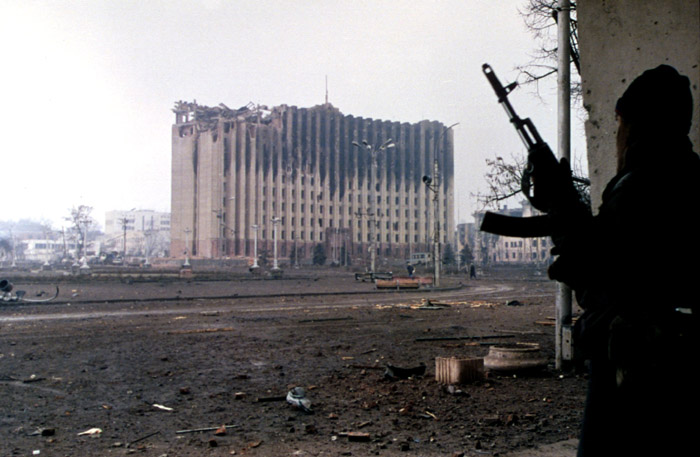
This comment seemed rather strange in light of the fact that Turkey's ordeal with the PKK is ultimately an issue of a minority ethnic group's will to politically separate. In many regards, Turkey's situation in northern Iraq and south-eastern Anatolia is analogous to Russia's debacle in Chechnya. Depending on one's point of point of view, the underdogs were either "freedom fighters" or "terrorists". Over the years, Russia has had its fingers burnt in a number of such blistering-hot pies ranging from Afghanistan to the northern Caucasus.

While there was some oil to be lost if Chechnya had successfully broken away, the main threat was the dismemberment of the very ethnically and regionally-complex puzzle that is the Russian Federation. This was especially a concern when Boris Yeltsin was proving rather incapable of running the show in Moscow. Vladimir Putin arguably reignited the disastrous campaign in Chechnya in order to rally the country around a single nationalist cause. Russian history is full of similar examples of the country's political leaders using the "foreign threat" to their political advantage. It would seem that Turkish politicians have often capitalized on the "PKK-threat" for this same purpose.

Clearly, Russia's voice concerning the PKK-issue is not as potent as it would be for an event related to Armenia or Central Asia. It is quite possible that Russia has already established certain economic ties with the Kurdish government in northern Iraq, which they do not want compromised. Vladimir Putin is apparently scheduled to visit Iran in the very near future. Hopefully, we will gain some greater clarity concerning this rather surprising statement at that time.

7.10.07

Pipeline Politics: Turkey's South Pars Project

Turkey and its state-owned oil company, TPAO, have made an uncharacteristically bold move in the theater of geopolitics. Despite intense political and financial pressure from the Bush administration, Turkey has taken a brave step forward, choosing to independently finance the $3.5bn necessary to initiate the South Pars natural gas development project in Iran. Turkey was unable to secure the outside financing, which is typical of a project of this scale, due to the recent American-led financial embargo on Iran.

Ankara apparently considers the strategic opportunity presented by the development of the South Pars fields as having sufficient long term value to outweigh the short term diplomatic turmoil, which will most likely ensue from this decision. From the prospective of this observer, the choice to independently pursue this opportunity should be strongly lauded for being very shrewd in both political and economic regards.

By disregarding Washington's warnings concerning any type of engagement with Iran, Ankara has tacitly communicated the obvious: President Bush is a lame duck. This blatant, yet well-calculated, act of defiance is a healthy gesture for Turkey as it tries to forge its own future as opposed to relying on heavy-weights like the US or hypothetically even the EU. If one considers this act along with Turkey's decision not to allow the US military to use Turkey as a northern invasion route for the second invasion of Iraq, it would seem that Turkey is no longer simply an acquiescent member of the Western/NATO camp. The Cold War is over and Turkey is very right to adjust its geopolitical posture accordingly.


In terms of its economic significance, the South Pars decision confirms the general consensus that Turkey's development of these natural gas fields will play a very important role in its future rapport with Europe. In particular, the supply of gas guaranteed by the project will further promote Turkey's goal to position itself as a critical energy transit corridor for Europe. Europe, like Turkey, currently depends on Russia for the majority of its natural gas needs. Once the flow of resources from South Pars join those energy resources already flowing from Central Asia, Turkey's pipeline network will emerge as a preferable alternative to Russia's divisive behavior regarding energy supply. (For further reading about Turkey's emerging role as an energy transport corridor, please read this Bosphorus Watch article from July.)

It is of course another matter whether the South Pars fields actually get developed by Turkey in the near future. Although this observer is not particularly convinced that there will be an invasion of Iran, a military conflict nonetheless represents one of a myriad of other factors, which could ultimately stall or even terminate the project. Chief among these factors would be the character of the current Iranian regime, which has shown its penchant for the unpredictable.

Another factor suggested by a a friend of mine, who is a Turkish businessmen, concerns the true intentions of Ankara. By demonstrating its ability to self-finance and independently cooperate with Iran, Ankara has gained a very valuable geopolitical bargaining chip with both the US and possibly even the likes of France. As my friend astutely pointed out, it is possible that Ankara has in fact no intention of actually realizing the Iranian project, but will instead use it to diplomatically extract certain equally valuable concessions from the West. Either way, South Pars is a win-win situation for the Turks.

22.9.07

Turkey's Silence On Iran Question

During the past week, the global press has enjoyed a multimedia feast over the comments about Iran made by France's Foreign Affairs Minister, Bernard Kouchner. While these remarks were subsequently tempered by the French President, Nicolas Sarkozy, this week's exchange nonetheless underscores the increasing weight that the Iran-question currently receives in diplomatic and political circles outside of Washington.

The press in Turkey has also been following this story quite closely, which is only natural for a country that borders on the pariah-nation in question. What has particularly puzzled this observer is the general absence of Turkey's political elite in the overall international dialog related to Iran and its potential development of nuclear weapons. While there does seem to have been discussion between Ankara and Washington concerning the Bush Administration's view that Turkey should freeze all trade with Iran, there has been little proactive commentary about the Iranian issue on the behalf of Ankara. Such relative silence on the part of
Erdoğan and Gül would seem to be misguided for two main reasons.

Even a limited military attack on Iran would most likely have disastrous effects on the relatively fragile Turkish economy. In addition to losing its direct trade with Iran, the Turkish economy depends on increasing future levels of foreign investment in order continue its positive growth trends during the coming years. Needless to say, investors will be very reluctant to sink meaningful amounts of capital into Turkey if Iran is launching missiles through Turkish airspace as a retaliatory measure.

Moreover, the Turkish economy has come to rely on the flow of natural gas from Iran during the past two decades. A military action against the country would clearly necessitate the cessation of this supply and force Turkey to further rely on Russia for its energy needs.

The second important concern related to Ankara's silence is related to how Turkey views itself as a regional player. The now cliche reference to Turkey functioning as Europe's bridge to the Middle East and Asia would suggest that Turkey is consistently active in the affairs of the region. While Iran and Turkey do have very clear religious and cultural differences, the current drama in Iran would seem to be a perfect opportunity for Turkey to show the world its ability to act as a regional facilitator.

Although this observer does not believe in the practical value of "Camp David-style" political summits, which are meant to reconcile the differences between two foes through a series of photo opportunities, it would seem that Turkey could gain incredibly valuable recognition by demonstrating its ability to play such a role.

Instead, it appears that Turkey is content to remain in the shadows of the West instead of embracing this looming disaster as a potential diplomatic extravaganza. Such opportunities are few and far between. Turkey's unwillingness to seize the initiative in this scenario ultimately communicates a rather petty self-image in regard to its involvement in the region.

26.8.07

Pipeline Politics: Further Reading II

In its August 23rd print edition, The Economist magazine published an article, which echoes many of the same observations that were made in the July Bosphorus Watch piece entitled, "Turkey's Pipeline Politics: Russia, Iran, Greece, Italy".

To view The Economist article, please click here.

The Economist posits that Prime Minister Erdogan's effort to cultivate greater energy ties with Iran will help his country's chances to join the European Union in the future. It believes that Turkey's heightened role as an energy transportation corridor will only increase its strategic value to the EU.

While these energy developments will certainly not hurt Turkey's bid to join the EU, it seems unlikely that they will represent a deciding factor in the EU's admission process as The Economist might be suggesting.

Simple economic and geographic realities dictate that Europe is by far the most important and logical market for any energy supplies flowing through Turkey. This will be the case whether or not Turkey is eventually offered the opportunity to join the EU.

It is therefore the opinion of this observer that that the EU would not gain any meaningful, strategic energy advantage by drafting Turkey into its ranks. The lack of formalized political ties between the Republic of Turkey and the EU will not influence the realities that govern Turkey's future energy transportation business with Europe.

Azerbaijan - Iran Relations: Further Reading

In light of Iranian President Mahmoud Ahmadinejad's recent state visit to Baku, Rovshan Ismayilov of Eurasianet.org has published an excellent article detailing the current state of relations between Iran and Azerbaijan.

Click here

In addition to Azerbaijan's close geopolitical ties with the United States, Iran is primarily concerned with Azerbaijan's territorial claims in the resource-rich Caspian Sea.


19.8.07

Turkey's Future in Central Asia

Discussions with Turkish citizens concerning topics related to the ethnic diversity of their country, such as the infamous "Kurdish problem", tend to return to the same idea: Turks and Kurds came from lands in Central Asia and settled in Anatolia along side ethnic Armenians, Greeks and Arabs. Due to manner in which it is depicted in their school books, ethnic Turks in Turkey have a rather romantic impression of their Central Asian Oğuz ancestry.

While ancestry plays an important role in anchoring Turkish interest in Central Asia, more contemporary interests related to economic and political influence have developed this relationship further. Until the fall of the Soviet Union, Turkey's connection to its Turkic cousins in Central Asia was considerably limited due to the Soviet Union's suzerainty in these areas. When the fall of the Soviet Union opened the Turkic countries of Central Asia to outside influences, Turkey considered itself in a prime position to augment its influence in Eurasia.


Turkey's contemporary attempts to make inroads in Central Asian affairs peaked in the middle of the 1990s. Hoping to renew older attempts to forge Pan-
Turkism under the direction of the secular and western-oriented direction of Ankara, Turkey set out to promote new modes of cooperation in the Turkic world. Although Turkey was successful in realizing the adoption of Latin script in Azerbaijan, Turkmenistan and Uzbekistan, their efforts to create greater cultural, political and economic cooperation were stymied. Progress was made in Azerbaijan due to a shared antipathy for Armenia, but Turkey was unable to overcome the lingering obstacles related to the Soviet era in Turkmenistan and Uzbekistan. Since meaningful progress was not made during this first post-Soviet attempt, the cause of Pan-Turkism seems to have been abandoned for the time being.

American military activities and the new Great Game to control the flow of Central Asia's energy resources have dominated the region's geopolitical headlines during the past decade. Compared to its political initiatives in Europe and along its southern borders, Turkey has not been particularly active in the east. Making deals to transport Central Asian energy through Turkey's system of pipelines represent the recent highlights of Ankara's dealings in Central Asia.

Joshua
Foust of Registan.net recently wrote a piece about the future of Central Asian geopolitics entitled, "Iran and China Rise; Shall Russia and the U.S. Fade Away?" While his insights are all quite sound, it is remarkable how Foust does not feel it necessary to mention the possibility of Turkey playing a bigger role in Central Asia's geopolitics. When asked about this omission by this observer, Foust answered:
I certainly see Turkey trying (they’ve made a few weak stabs at it), but I don’t see how they can overcome the heft of Iran, Russia, China, the U.S., or the EU. The Turkic connection exists, but it’s also fairly weak, as you rightly said. There remains more cultural affinity for, depending on the country, China, Russia, or Iran—no one seems to want to announce Turkey as their best friend. Which, I think, is too bad. I would prefer Turkey to Russia or Iran or China any day.
It would seem that Turkey can not afford to continue this course of treading lightly in Central Asia. Central Asia simply has too much economic significance for Turkey's future. Although the United States currently protects Turkey's interests as a conduit for Central Asian energy, Turkey should not depend on this arrangement alone. While Ankara does not possess the same financial resources as Beijing or Moscow to back its policy in Central Asia, it will become more capable as the Turkish economy receives more foreign investment.

If Turkey does not pursue its interests in Central Asia more aggressively, it ultimately risks losing Central Asian energy to ports on the Persian Gulf and to pipelines built by Russia and China. Such a fate would significantly diminish Turkey's standing in the region.

17.8.07

Pipeline Politics: Further Reading

For further information concerning the transportation of natural resources in Eurasia, please refer to the article "Putin’s battle over Caspian energy resources and transport routes" in Turkey Financial. Click here.

This piece outlines Russia's energy strategy and competitive interests related to future pipeline development in the region. Its consideration of Chinese interests in Central Asia is also noteworthy.

In July 2007, The Bosphorus Watch featured its first article about Turkey's recent maneuverings concerning
pipeline politics in Eurasia.

11.8.07

Turkey - Iraq Security Cooperation against PKK

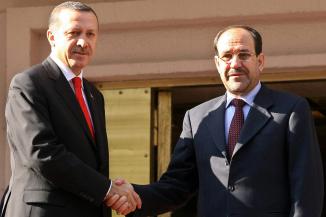
Iraqi Prime Minister al-Maliki and Turkish Prime Minister Erdoğan agreed on Tuesday to joint cooperation between Iraq and Turkey to combat PKK guerrilla activities in northern Iraq. The agreement represents yet another installment of an ongoing saga surrounding the Turkish military's growing frustration with pursuing PKK forces based in northern Iraq.

Over the course of the summer the Turkish military shelled positions inside the Iraqi border, causing a buzz among pundits concerning the possibility of a full-scale invasion. On July 30th, Robert Novak broke the news that the Turkish and the American military were preparing a joint operation meant to suppress PKK guerilla activites in the border areas. The Patriotic Union of Kurdistan's media outlet reported on August 6th that significant numbers of Turkish special forces are currently operating in Iraqi territory.

While Tuesday's agreement does have diplomatic significance for the relations between Iraq and Turkey, it is of little military significance in the eyes of this observer. The Iraqi military is a set of statistics in the minds of Pentagon bureaucracy. Middle East pundits are foolish to think that Iraqi cooperation will somehow improve Turkey's efforts to eradicate the PKK in Iraqi territory.
Moreoever, al-Maliki was not able to actually formalize Tuesday's agreement since he was required to seek approval from his parliament. Even if he does receive such approval, al-Maliki has had little success realizing such divisive initiatives through his country's fractured government. If anything, Tuesday's agreement coupled with the news of American military cooperation has merely paused the discussion in Turkey concerning the possibility of military actions in Iraq.

Turkey observers should also be cautioned for their tendency to hang onto every word expressed by Turkey's generals concerning an invasion of Iraq. A sustained and full-scale invasion of northern Iraq with its substantial border force would be a very expensive proposition. While Turkish forces would certainly inflict considerable damage on the PKK guerillas, it would seem very unlikely that an invasion would result in their total destruction. As the events of America's war in Iraq have shown, it seems likely that PKK forces would evade Turkish military incursions by slipping into neighboring Syria or Iran. Although these countries are by no means friends of the PKK, they have sporadically used the PKK as a destabilization tool against Turkey for almost two decades.

Finally, economic issues related to a Turkish assault on northern Iraq deserve greater consideration in the opinion of this observer. In his article entitled, "PKK Insurgency Grows as AK Party Renews Debate on Cross-Border Operations", Gareth Jenkins of the Jamestown Foundation refers to a series of pieces in the Turkish newspaper, Milliyet, which outline Turkey's growing economic presence in the Kurdish region of Iraq. To compromise the surplus of trade, jobs and investment opportunities that Turkey enjoys in northern Iraq would not appear to be prudent.

In addition, extensive Turkish military activities in the Kurdish areas of Iraq would certainly disrupt the ongoing positive economic trends experienced in the region. The certain cessation of foreign investment in the area governed by the Kurdish Regional Government (KRG), due to Turkish military operations in the region, would give the KRG reason to push for more autonomy and possibly the creation of a new Kurdish state. Such a scenario would certainly cause Ankara greater consternation than the current situation involving pesky PKK guerrillas based in northern Iraq.

28.7.07

Turkey's Pipeline Politics: Russia, Iran, Greece, Italy

Turkey's role in the global energy arena gained new layers of complexity during the month of July. Officials in Ankara and Tehran signed a Memorandum of Understanding to pump Iranian and Turkmen natural gas through the Turkish pipeline network for destinations in the lucrative Western European market. The two neighbors also agreed to a Turkish investment of $3.5 billion to develop three phases of Iran's South Pars gas field, starting in 2008. During the following week, Turkey, Greece and Italy agreed to terms in Rome for the transportation of Central Asian natural gas through an existing pipeline from Turkey to Greece, and then through a new underwater pipeline that will be constructed between Greece and Italy starting next year.

These July initiatives are important building blocks for Turkey's nascent efforts to acquire valuable political and economic leverage as a key purveyor of Central Asian and Middle Eastern energy resources. The successful opening of the U.S. backed Baku-Tblisi-Ceyhan (BTC) pipeline in May of 2006 constituted a proof of concept that Turkey is a viable alternative to Russia for transporting Central Asian oil and gas resources. While the U.S. was the initial supporter for Turkey's role as an energy transporter, Turkey has astutely developed its own relationship with Iran to increase its involvement beyond U.S. geopolitical interests. As early as 2001, Turkey began to purchase Iranian gas exported from Tabriz to Ankara to fulfill domestic demand. Just as was the case in 2001, U.S. officials have voiced their displeasure with Turkey developing energy ties with this international pariah.


U.S. criticism over Turkey's economic ties to Iran are quite irrelevant when compared to the political capital Ankara gains by fostering regional energy cooperation and development. Turkey's ascendancy as a regional energy transportation corridor exists in direct competition to Russian political and economic interests. Russia not only controls a significant number of existing gas pipelines linking Central Asia and Europe, but it also has the financial and political capability to stymie further Turkish energy initiatives. Russia's recent announcement in March to build an oil pipeline through Bulgaria and Greece in order to bring its own resources to the Mediterranean is a perfect example of this competitive challenge.

There is therefore considerable logic in Turkey's decision to grow its regional energy cooperation with Iran. Turkey needs Iran not only as a supplier of energy for its network of pipelines, but it also needs Iran's regional influence in order to parry Russian efforts to dominate Central Asian energy resources in the future.